The Missing Trimester
Model of Reproductive Grief Care
Reproductive Grief:
Why Specialized Training Matters

1 in 6 adults experience fertility challenges in their lifetime.
14-20% of all pregnancies end in miscarriage.
21,000 stillbirths annually in the US.

82-94% of healthcare providers receive no formal training in dealing with patient’s experience of perinatal loss and bereavement.

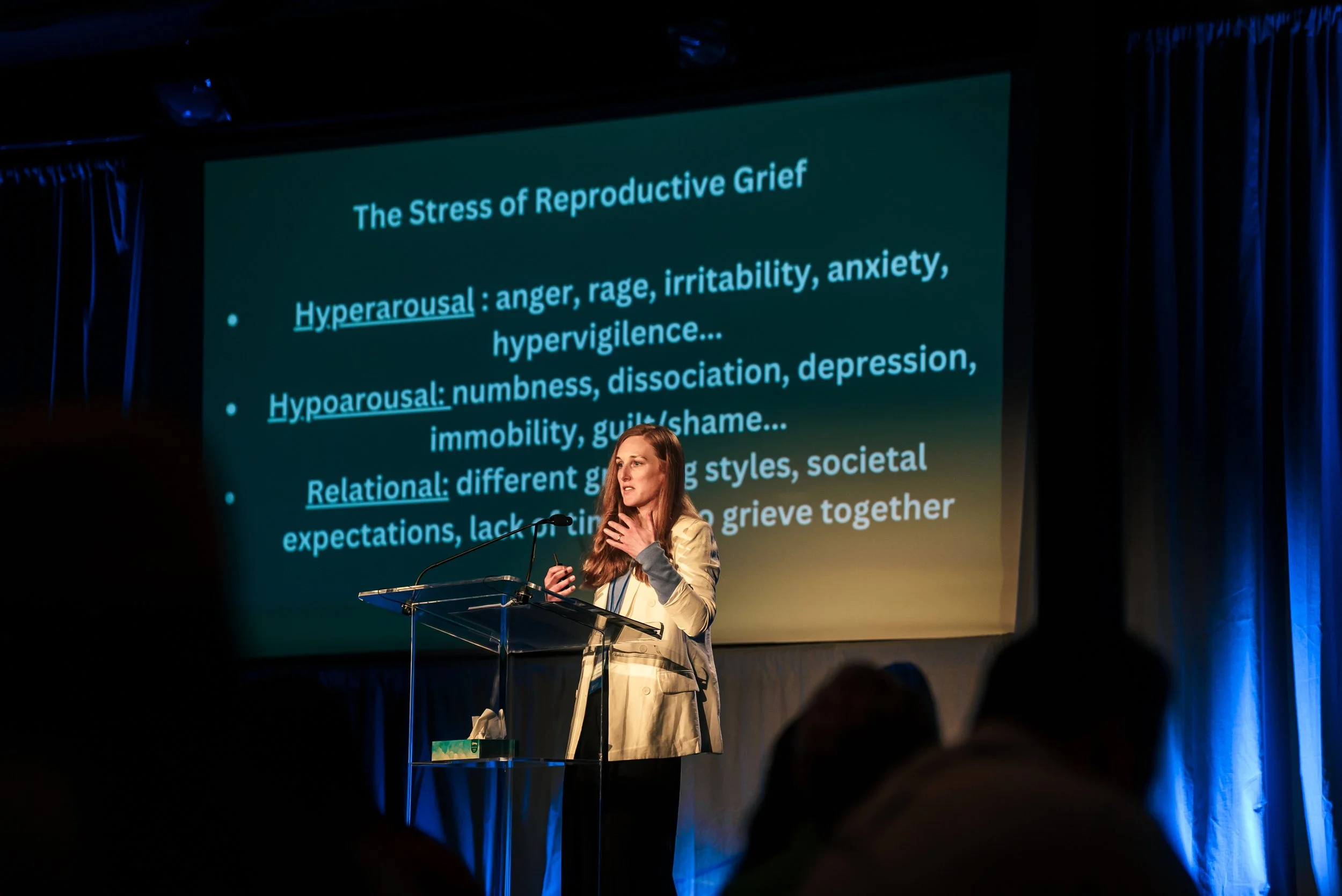
Complicated grief reactions occur at 3 times the rate for perinatal loss compared to other losses.
Up to 60% of patients and partners exhibit symptoms of anxiety, depression or traumatic stress following perinatal loss.
The Missing Trimester Model of Reproductive Grief Care is a training and consultation service for healthcare organizations, group therapy practices, and perinatal health clinicians on the topic of reproductive grief, and includes culturally aware and trauma-informed interventions to support patients coping with fertility challenges and perinatal loss.
I developed The Missing Trimester to specifically address the complicating nature of disenfranchised reproductive grief and to empower those who support grievers by actively reducing stigma and incidence of insensitive comments, while teaching simple yet powerful grief rituals to concretize losses which are often invisible. By addressing the hallmarks of disenfranchised reproductive grief, we can reduce the emotional burden on patients, address common symptoms of isolation and self-blame, and create more opportunities for healing in healthcare.
Read more about the model, the need for it, and the origin story of TMT below.
3 Pillars of The Missing Trimester
Community Education
Help to reduce effects of disenfranchised reproductive grief by making your household, private practice, or organization, more informed, sensitive and responsive to the needs of grieving individuals and families.
Practitioner Support
It can be easy to default to optimism, emotion avoidance, or melancholy if you’re a professional working regularly with people bearing the weight of infertility or loss of a pregnancy or infant. The Missing Trimester seeks to support your efforts with compassionate care for empathic burnout, countertransference, stress, and resources to connect to a larger network of supportive providers.
Person-Centered Care
By focusing on evidence-backed and individualized trauma-informed care, we support you to develop plans for grievers that optimize strengths, utilize resources, and create a holding environment for grief to flow and become integrated as a part of life.
The Missing Trimester
Origin Story

After training with Maternal Mental Health NOW in 2018, taught by Dr. Diana Barnes, Dr. Emily Dossett and Gabrielle Kaufman LPCC I began receiving referrals for patients for perinatal mood and stress concerns. What surprised me was that I also received a significant number of referrals for people who were experiencing perinatal loss or fertility challenges. Having had my own experiences in this realm, I came to these clients with a strong depth of empathy and years of experience as a grief therapist, but I realized that reproductive grief exhibits unique symptoms and expressions, and requires specified skills. I began a passionate course of study, reading every book and taking every training I could find on perinatal loss, infertility, and reproductive grief. The greatest learning came from the clients themselves: they showed me where the theories and interventions fit, and where they fell short. One of the most evident patterns I began to track clinically were the psychological effects of disenfranchised grief—These are the kinds of losses that don’t get funerals, or time off of work. The ones that are sometimes only known within the confines of a OB or midwife office. The effects of disenfranchised reproductive grief showed up in my office weekly—individuals experiencing isolation, self-blame, disconnection from a partner who grieves differently, or shame for continued grieving after family or friends think they should feel better.
What I found both in the research and in my clinical experience was impactful. Effects of disenfranchised grief compound symptoms of anxiety, depression and acute stress in clients. The research shows that complicated grief reactions occur at three times the rate for perinatal losses compared to other kinds of loss (Lundorff et. al 2017) and yet in the US at present there is no best practice referral and treatment plan for patients leaving the hospital or IVF clinic following loss. There is not yet grief literacy in our society to provide adequate support.
These types of loss can include miscarriages, failed IVF retrievals or transfers, ectopic pregnancy, late stage pregnancy losses, TFMR, stillbirth, infant loss and others. These are losses that can involve physical pain, trauma, emotional distress, and spiritual crisis. Up to 60% of patients and their partners exhibit symptoms of anxiety, depression or PTSD following loss (Berry, 2022), making trauma-informed and compassionate care of paramount importance. I realized that I could continue to stay solely in the therapy office and treat the effects of disenfranchised reproductive grief, or I could go out and do my part to work to eliminate it. This is how The Missing Trimester was born.